
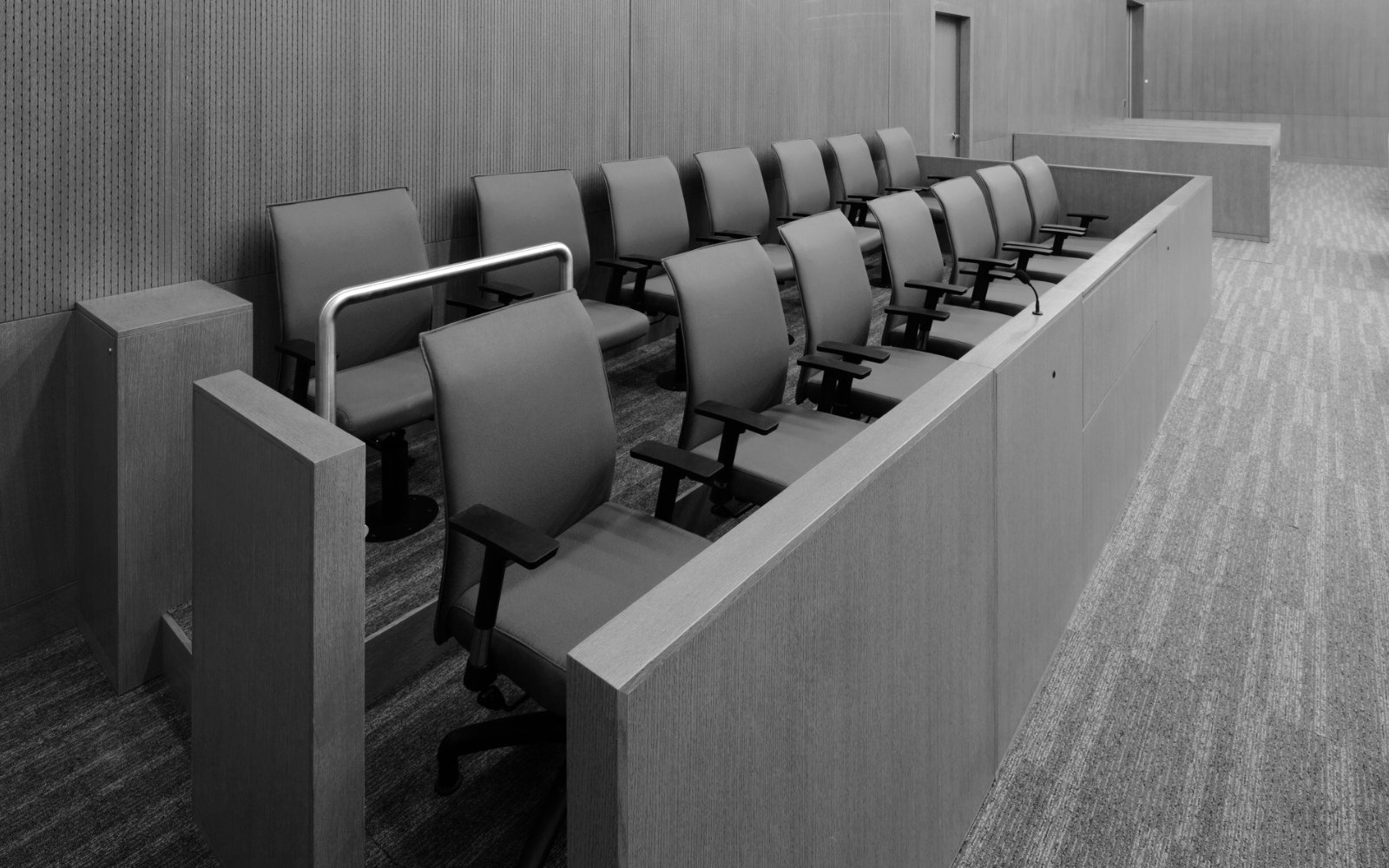
Walking into a courtroom for jury duty, I felt immediately out of place—in the best way possible. It was my first time sitting in a courtroom, and I was clearly the youngest person in the room. Many people complain about jury duty, but as a recent college graduate working at a law firm and planning to attend law school, I looked forward to it.
I was not disappointed because serving on this jury was one of the most educational experiences I have had outside a classroom. The case itself involved aggravated unlawful use of a weapon. The defendant was a 20-something-year-old man whose future quite literally hung in the balance. The circumstances were serious and, at times, heavy to sit with.
According to the evidence presented, police responded to a 911 call reporting a man with a gun near a bus stop late at night. When officers arrived, they saw three men in the area. Two ran—one of whom was the defendant—and one stayed behind. As the two men fled, a gun was seen falling to the ground and was later recovered, fully loaded, on the sidewalk. The incident was captured on a police body camera, though the footage was dark and blurry. The prosecution relied on that footage, the recovered gun, and testimony from two officers. The defendant lacked the paperwork required to legally carry the weapon.
Watching the attorneys try the case was especially impactful. The defense attorney was passionate, strategic, and compelling—someone whose presence filled the courtroom. The two state attorneys were more restrained and matter-of-fact, which created a striking contrast in style. Seeing how differently each side approached witness questioning and argument reinforced how much advocacy is both an art and a discipline. When one officer contradicted himself on the stand, I saw firsthand how credibility can shift in real time—and how carefully jurors notice those moments.
Our jury was diverse in age, race, and background. Despite language barriers for some and fatigue as deliberations stretched late into the second evening, the group took its responsibility seriously. We talked through every opinion, replayed the body camera footage dozens of times, and even used the physical weight of the gun to test scenarios. What began as a 50/50 split slowly moved toward consensus through methodical analysis and respectful debate.
After nearly seven hours of deliberation, we reached a unanimous guilty verdict. More important than the outcome, though, was what I learned: The law is not abstract when you are applying it to real lives. Evidence must be challenged and arguments must earn trust if they are to succeed. Justice depends on people willing to listen closely and think critically. As I move forward toward law school, this experience reaffirms my interest in a career where careful reasoning and responsibility can directly shape outcomes that matter.